Custom Characterset on the C64 in C with CC65
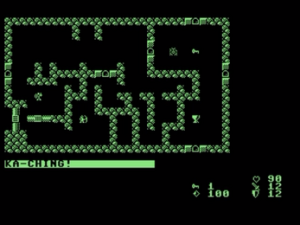
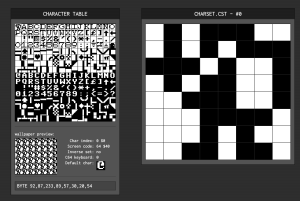
Like many 1980s computers, the C64 allows you to reconfigure the default characterset (kind of like a font) to display special tile graphics in your game.

Retro Game Coders
Retro computer/console game + dev community
Like many 1980s computers, the C64 allows you to reconfigure the default characterset (kind of like a font) to display special tile graphics in your game.
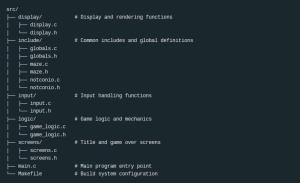
Today I spent some time on the reorganization of the Dungeon game codebase into a modular structure.
I thought I would document it here along with key C programming concepts I used in the process.
In this update I learned more about Pygame and considered it as an option for a "modern systems" port of my cross-platform retro rogue-like game
Adding more features while coding my Rogue-Like game meant I butted up against memory limitations again.
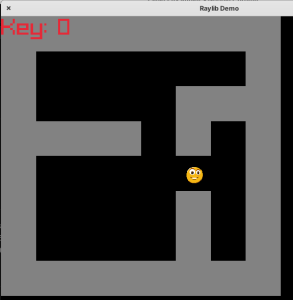
Getting Started with C and Raylib
I wasn't too surprised that my game didn't fit into the 3.5KB available on an unexpanded Vic 20, but I was sad to see it won't fit into a Commodore 16!
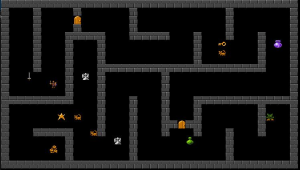
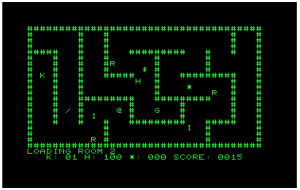
Today I threw away a whole bunch of code and started over, building a maze-based game map instead of the hard-coded, human-designed levels I had been using up until now.
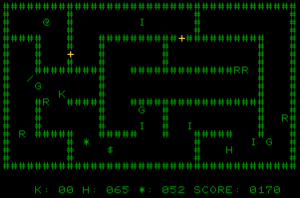
The first reboot Dungeon game test, working on Commodore PET (with others coming), all using random maps
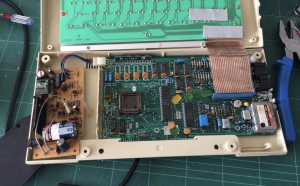
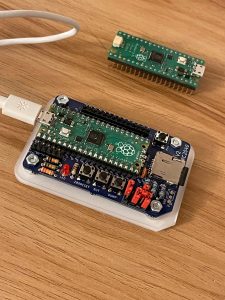
While on a CP/M kick, I thought I would dig out my RC2040. It’s a bit of an odd one this because it emulates the RC2014, which is itself a simulation of 1970s-era Z80 computers.
Getting elbow-deep in the systems of the 1970s and early 1980s. The very start of personal computing.
Before the "microcomputer" was invented, games were still shared between friends and members of clubs. Let's look at my favourite of that era - Star Trek!
Before Linux, before Microsoft was the powerhouse it is today, and even before the IBM PC was a thing, a company called Digital Research wrote the dominant microcomputer operating system, CP/M.