

ARM-based chips are found in nearly 60 percent of the world’s mobile devices
Introducing the “Beeb” – the inventors of the ARM architecture used these machines to simulate and develop chip designs. Those chips are now in every home and business.
ARM stands for Advanced RISC Machines (originally Acorn RISC Machine – Acorn was the company behind the BBC Micro).
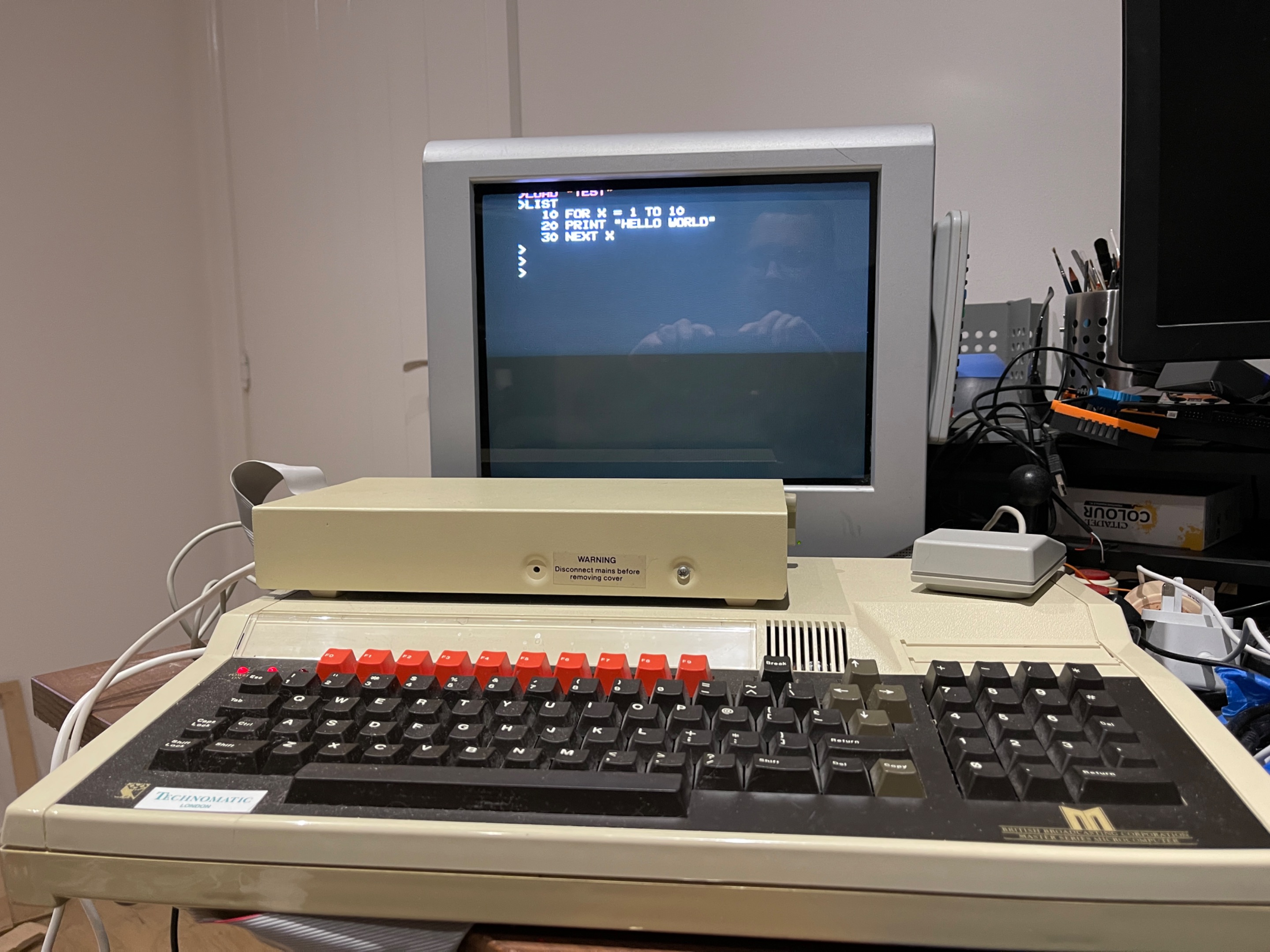
This particular machine is my BBC Master, plus 5 1/4″ floppy disk drive, and three-button mouse. Isn’t she a beauty?
Like many microcomputers of the 1980s, the BBC Micro ran on a 6502 series microchip. Unlike most of the competition, however, the BBC had the best BASIC programming language by far and arguably the best expansion capabilities.
I was a bit nervous plugging all of this in because almost none of my retro computers have been switched on in the couple of years since we moved back to England from Canada.
The CRT TV has been in cold, damp shed since I was gifted it by a member of the York makerspace.
Since we got the workshop and I fitted the loft out with insulation-friendly boards, I finally have space to get stuff out of storage and onto my bench!
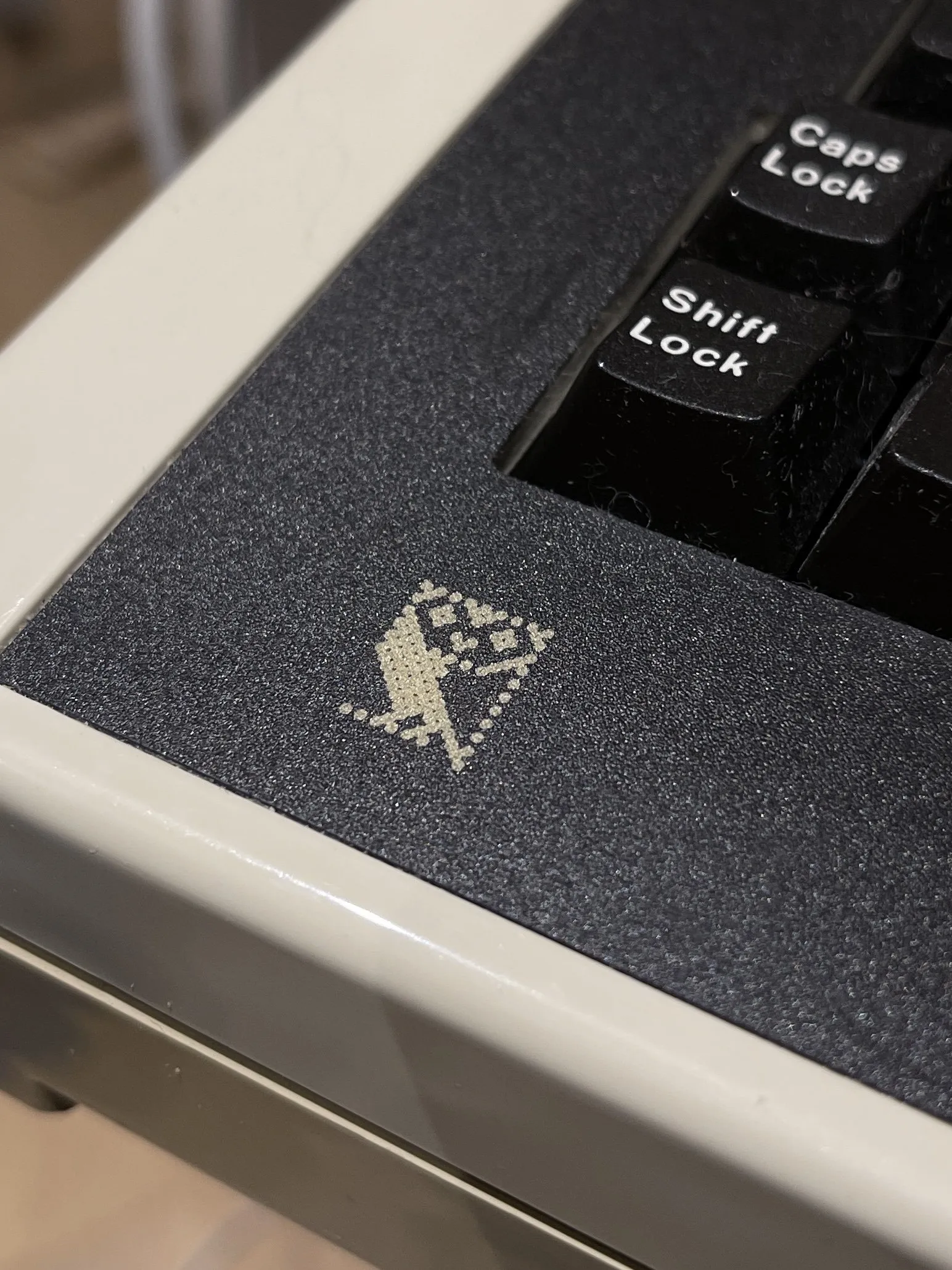
This owl logo was everywhere in school computer labs and on educational TV programming.
That TV programming is where the BBC part of the name came in. Yes, the same BBC that was responsible for television and radio entertainment in the UK.
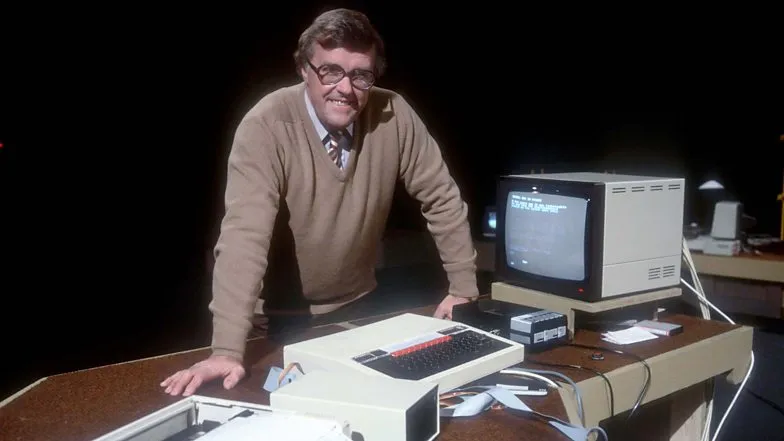
In the early 1980s the UK government was concerned that the Kingdom might get left behind by the computer age so they invested a fortune into standardised computer education, programming, and IT grants, to ensure a generation of computer literate kids.
They succeeded for the most part, and the hardware that won the bidding war was actually excellent. Unfortunately, being government-backed, only the most wealthy families and schools could afford the equipment unless heavily subsidised.
My Junior school (from ages 7-11 years old) had only one BBC computer. A teacher was an enthusiast so for a short time he might also bring in his ZX Spectrum, but officially the entire school had one computer to share between all the teachers and kids.
We did briefly get a BBC on loan for data entry. The target computer was to be a Master like the one I own now, but with a laser disk drive. This was for an ambitious project called the Domesday Project. Unfortunately the machine went back home before we got to see the fruits of our efforts.
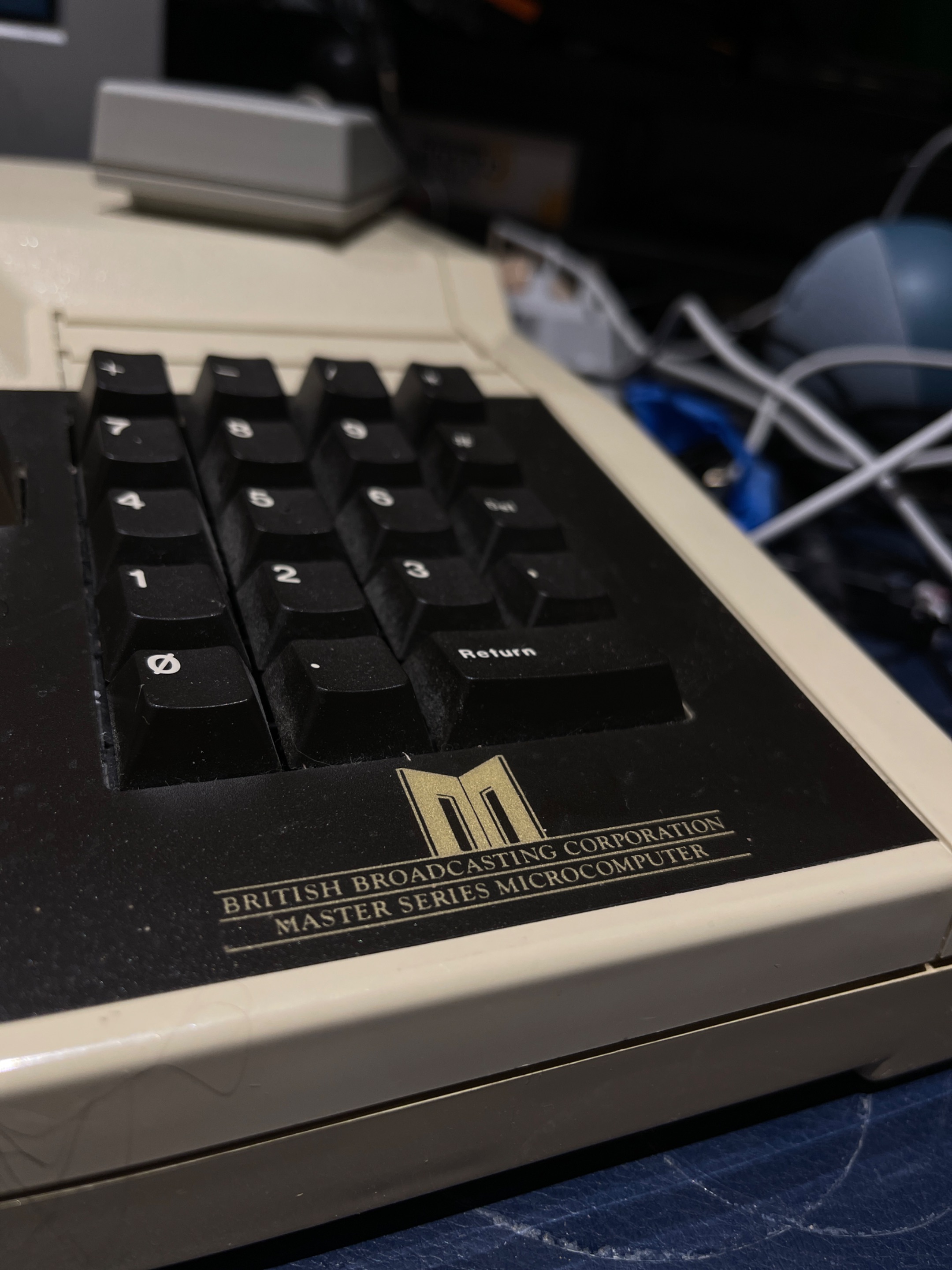
The Master series featured several improvements over earlier BBC Micro models. Rather than the MOS Technology 6502 microprocessor used by the Model B, Master series models used the slightly improved 65C12.[4] Fabricated using CMOS technology, the 65C12 used less power than the 6502 and offered somewhat better performance, reportedly “almost as fast” as the original 3 MHz 6502 second processor for the BBC Micro.[5] The systems had 128 KB of dynamic RAM as standard, alleviating the shortage of available RAM which had previously discouraged use of the display modes offering the highest quality graphics on earlier models
From talking to friends around the world, and watching retro YouTube channels, it seems that in Canada Commodore PET was a popular choice in schools, along with the Apple II which seems to have dominated in the USA.
 C64 Text Adventure Game Programming Tutorial